Professional Documentation Portfolio • Deshaun Fedd and Group 4
Project Overview
Group 4 developed a witch-hat inflatable based on a classic Halloween witch-hat form. The project involved developing a 3D concept, calculating the cone pattern, measuring and cutting material, connecting large sections, testing the structure, and revising the design when problems appeared during inflation.1. Mock-Up / Original Design
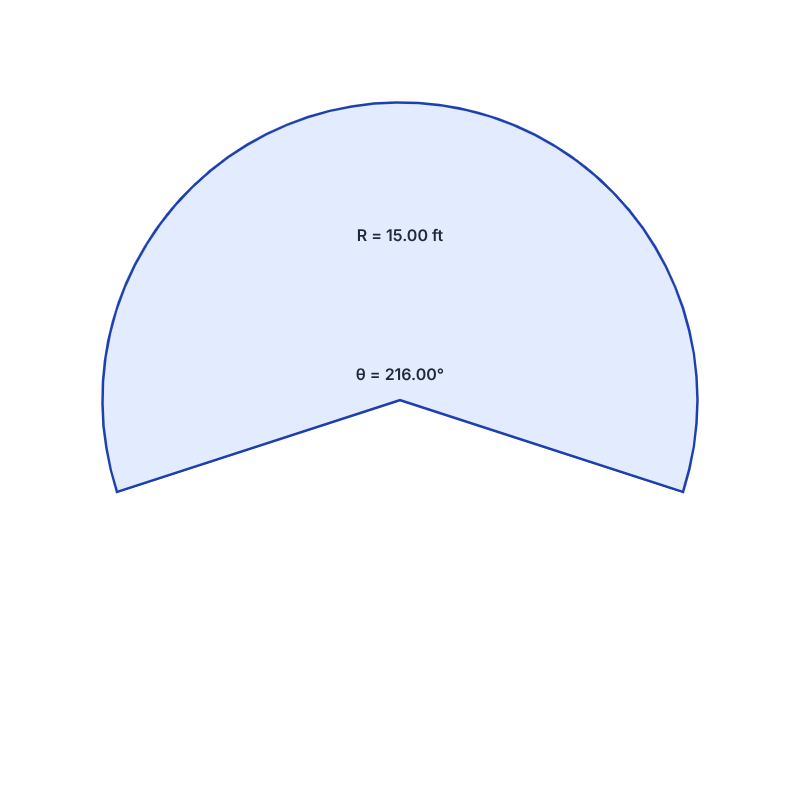
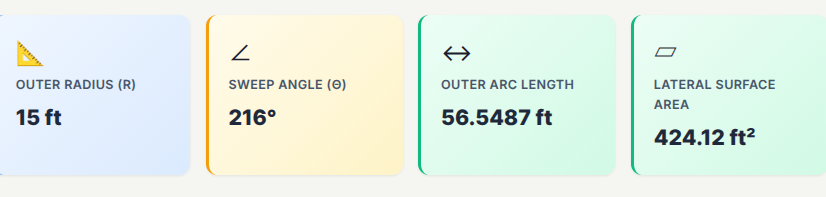
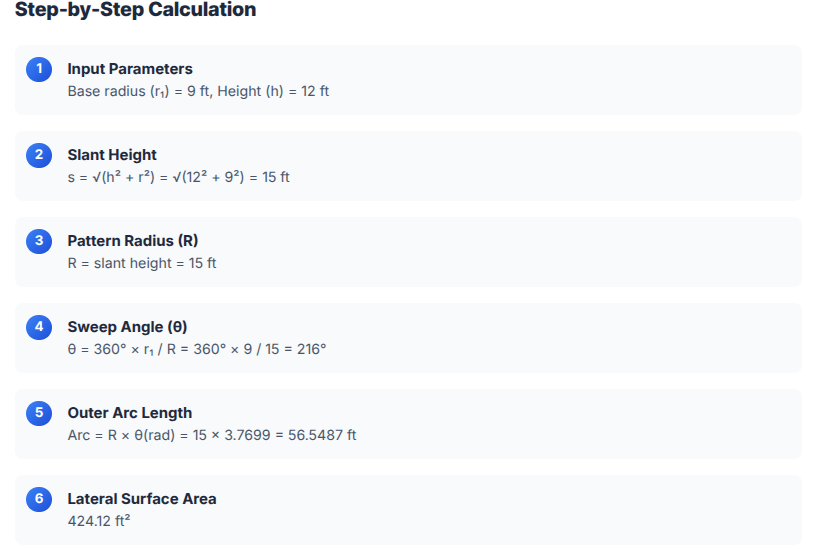
The group began with sketches of the front and back of the witch-hat form. The design was revised as the group identified issues with the height of the opening, sagging material, the brim, and how the inflatable would stay supported.The group also used a cone flat-pattern calculation. The documented math uses a 15 ft pattern radius and a 216° sweep angle. The calculations show a 12 ft height and 9 ft base radius, producing a 15 ft slant height.
Cone flat-pattern used to plan the material shape.
Step-by-step cone calculation: base radius, height, slant height, and sweep angle.
Calculated outer arc length and lateral surface area.
2. In-Progress Work
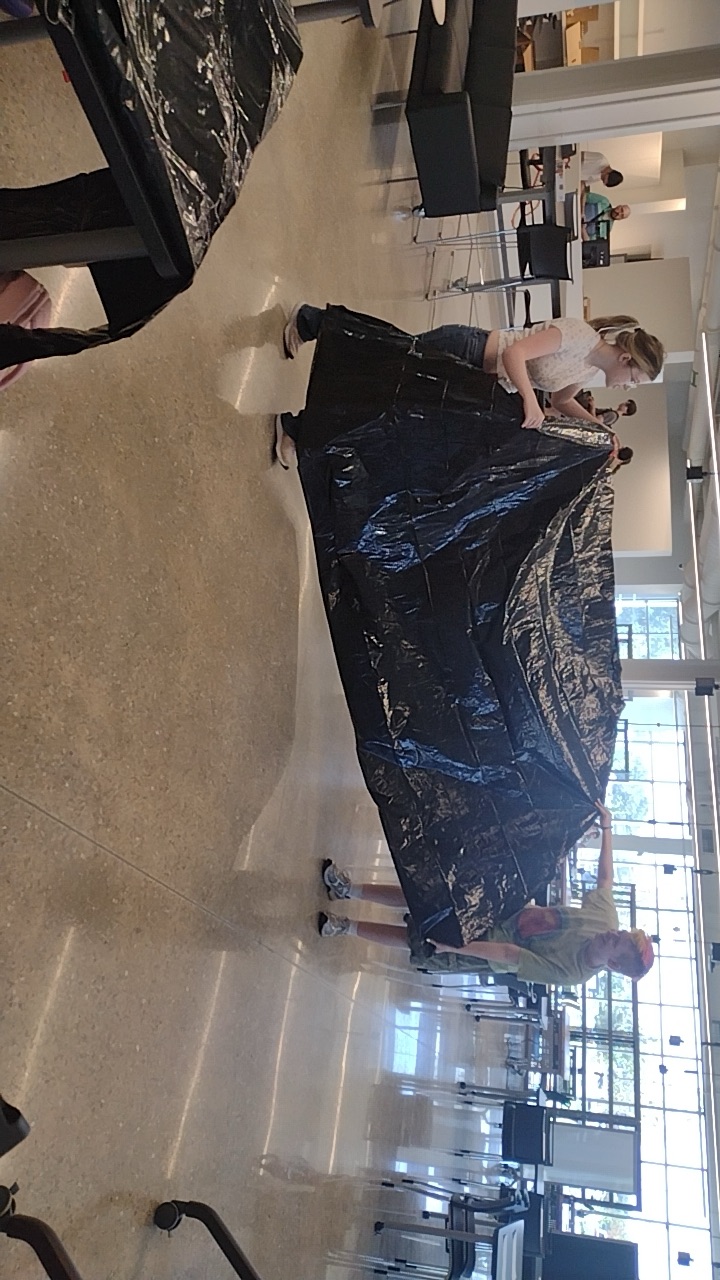
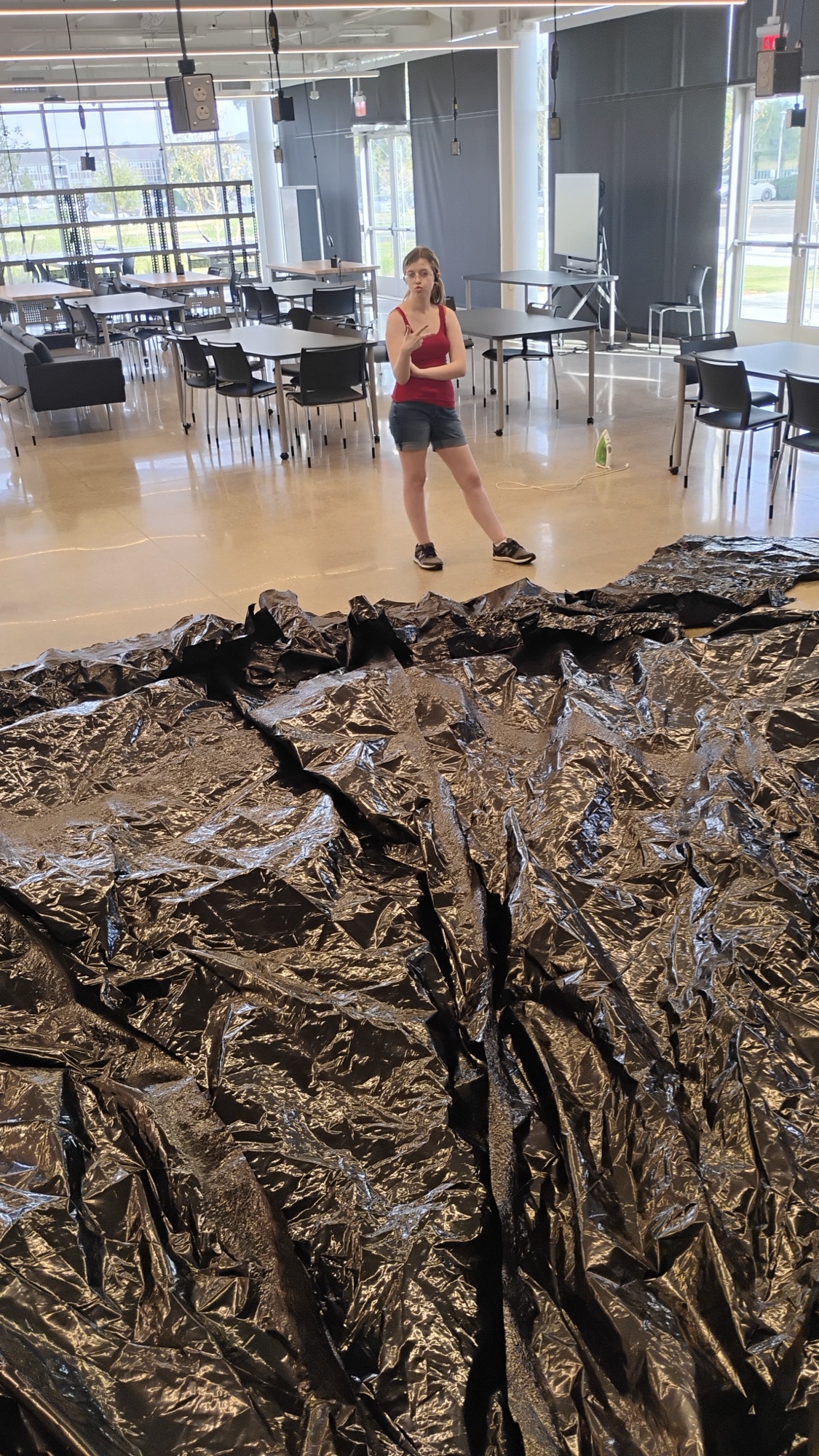
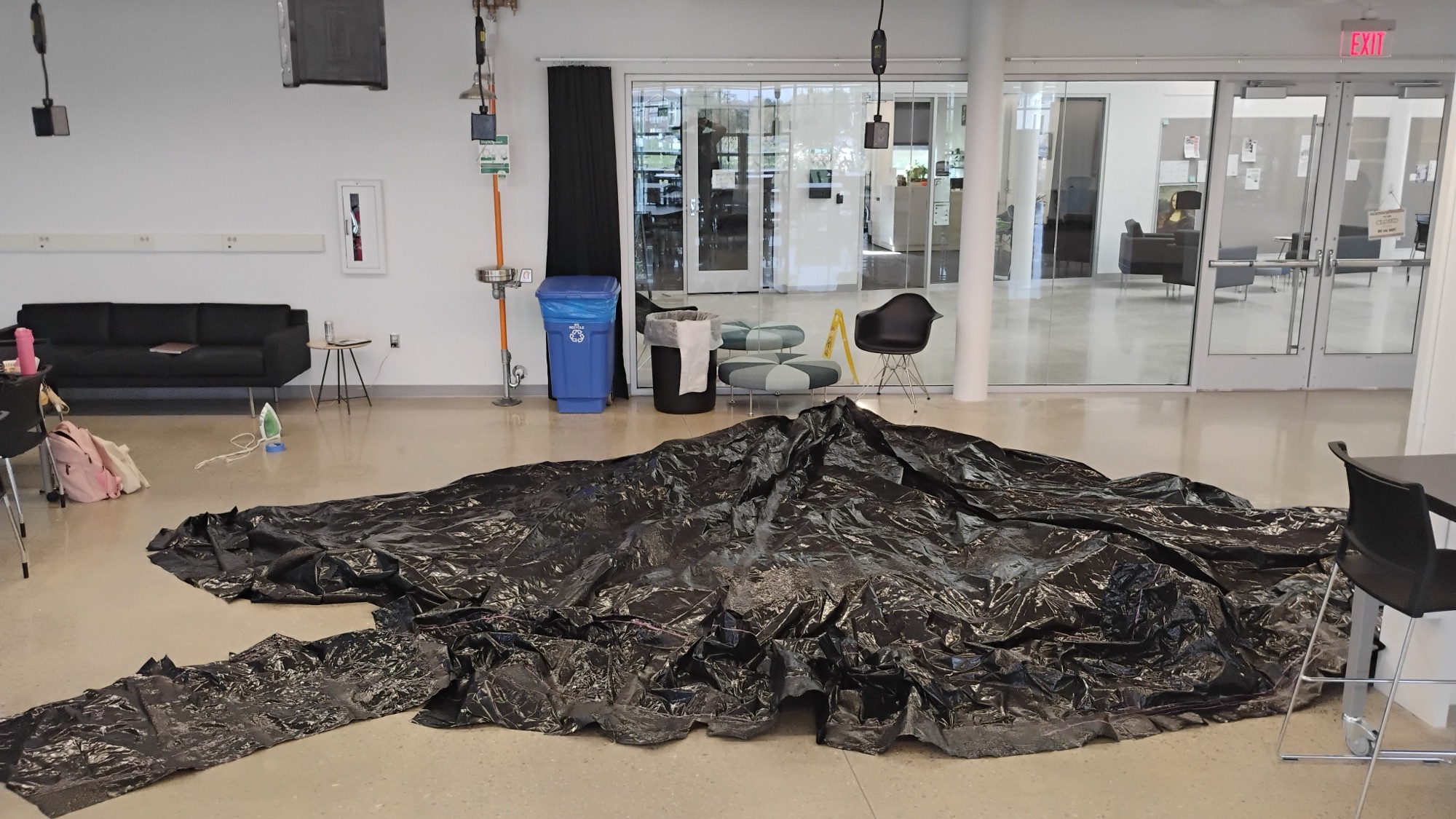
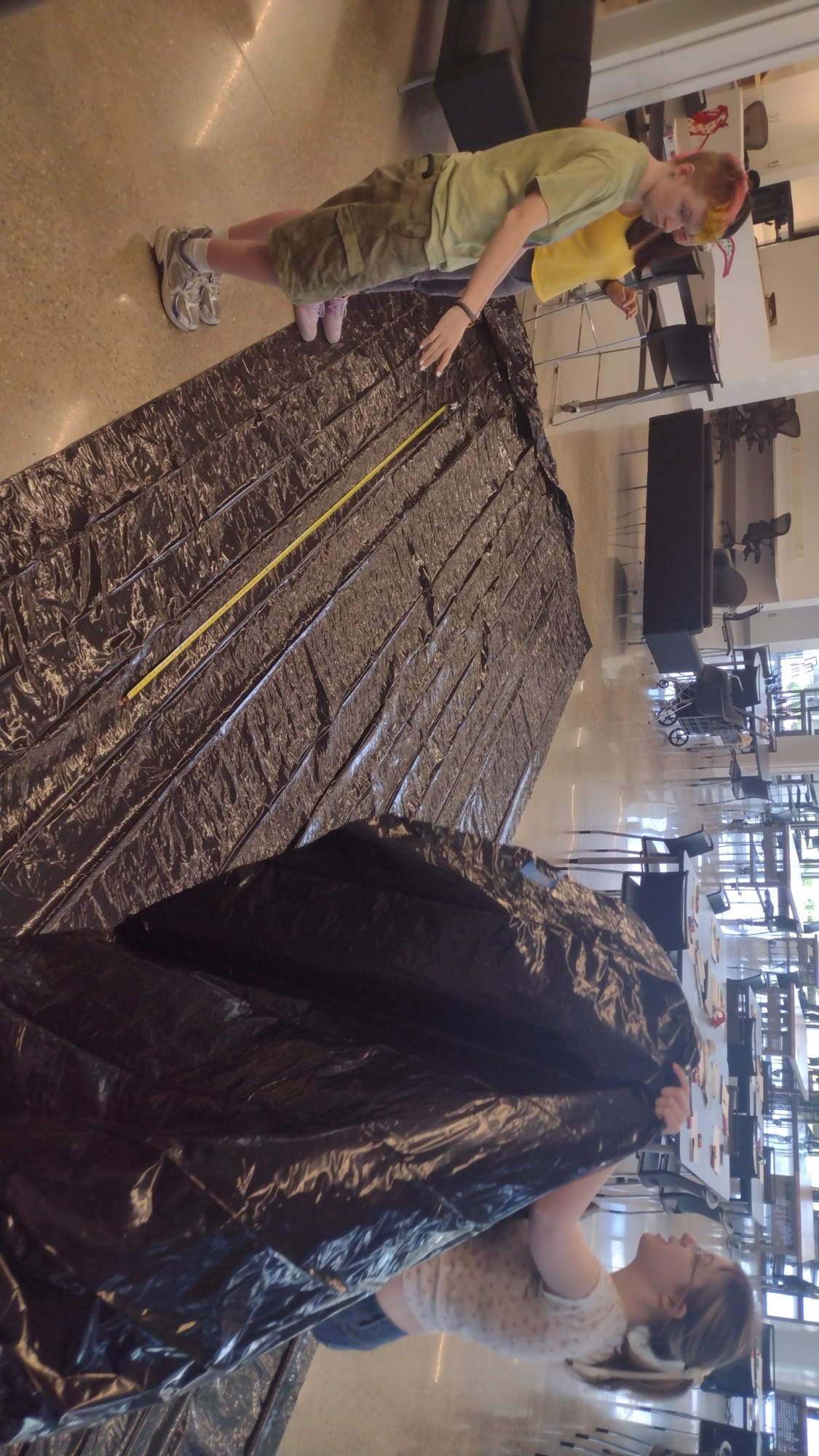
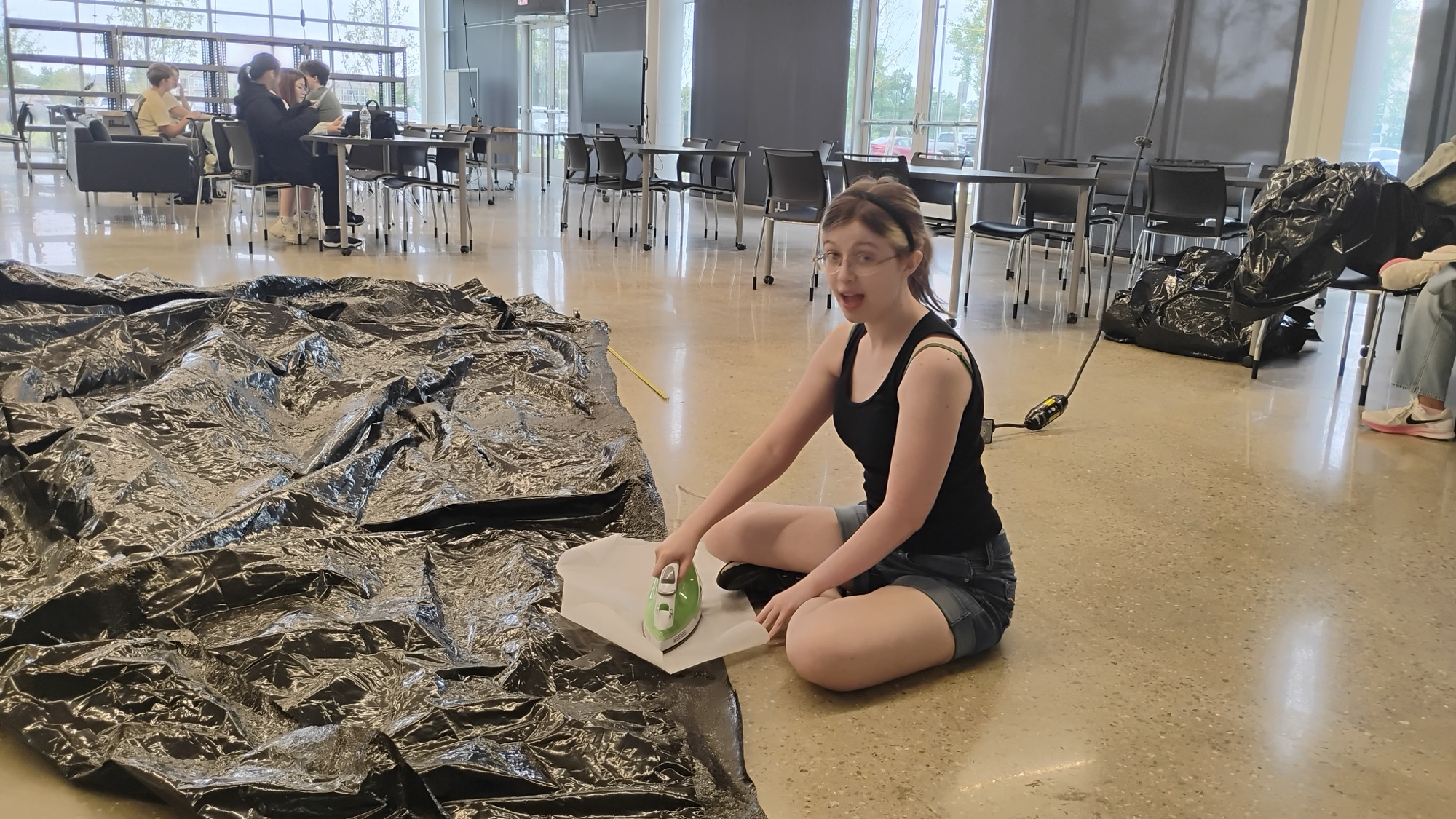
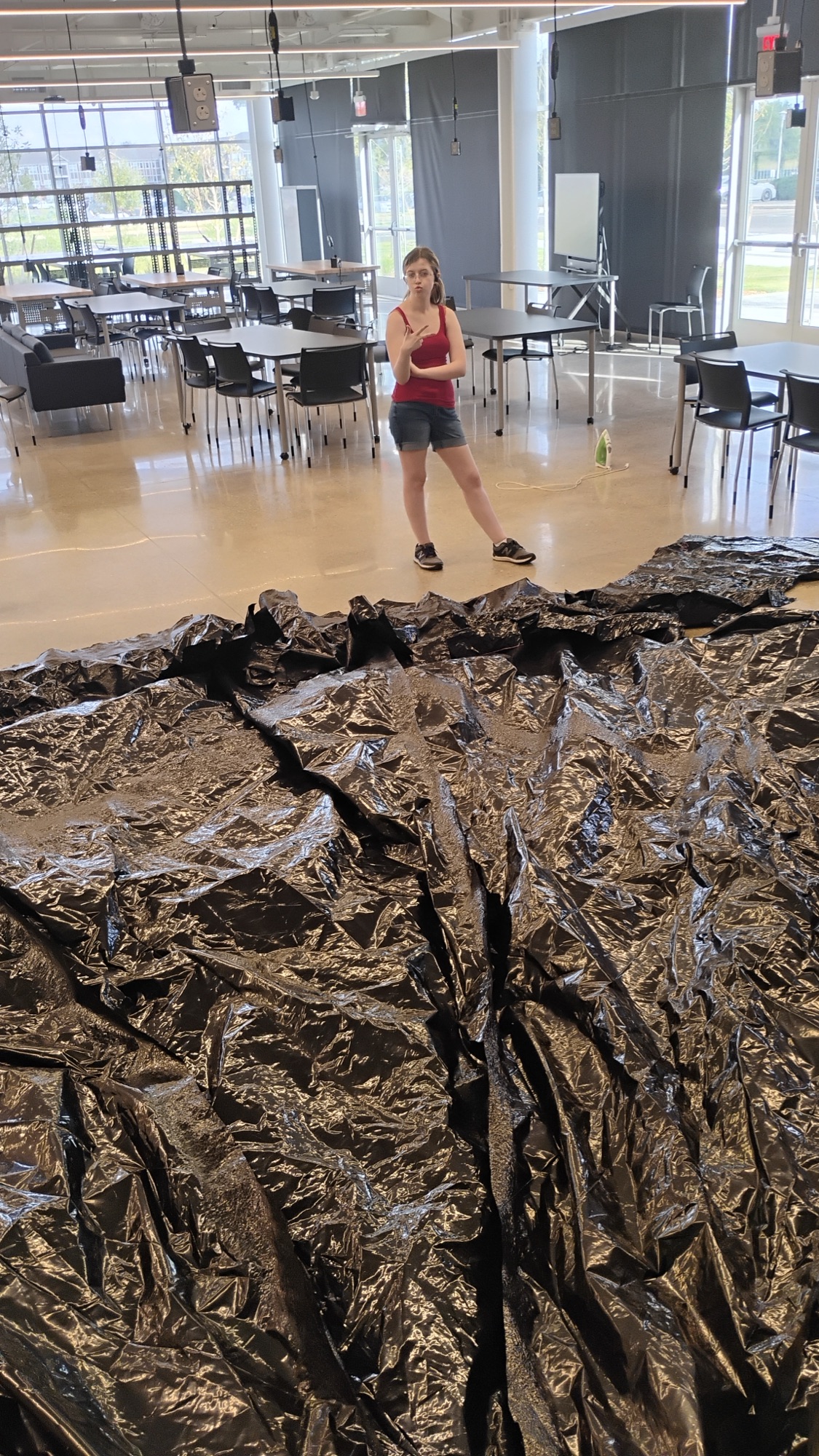
These photographs document the physical construction process. They show the material being laid out, measured, positioned, connected, and worked on before the final inflatable was completed.In-progress construction: the group is holding and positioning a large section of the black material.
In-progress construction: the material is laid out while the group works on the large panels.
In-progress construction: a large section of the material is spread out for assembly.
In-progress construction: measuring and working on the material before assembly.
Material being worked on with an iron as part of the construction/sealing process.
Additional construction documentation showing the material layout and work area.
3. Design Problems and Revisions
• The original semicircle-with-a-slit approach was found to be impractical, so the shape was divided into triangular sections.
• The group tested the height and opening and identified areas that were too high or created hazards.
• The material was tested for sagging and support issues before finalizing the structure.
• The group considered how the brim and outside weights could help stabilize the inflatable.
• Inflation testing was used to identify problems with the brim, hose/blower positioning, and overall support.
• The design was revised based on what the group observed during construction and testing.6. Activity Report
My role and responsibilities on the project included:• Contributing to the planning and development of the witch-hat inflatable.
• Helping with measuring and preparing the material for construction.
• Helping position, cut, connect, and work on the large material sections.
• Contributing to design revisions after the group identified problems with the shape, opening, brim, and support.
• Helping with construction and testing as the inflatable was developed.
• Working with the group to solve problems and improve the design.
• Helping document the construction process with photographs.